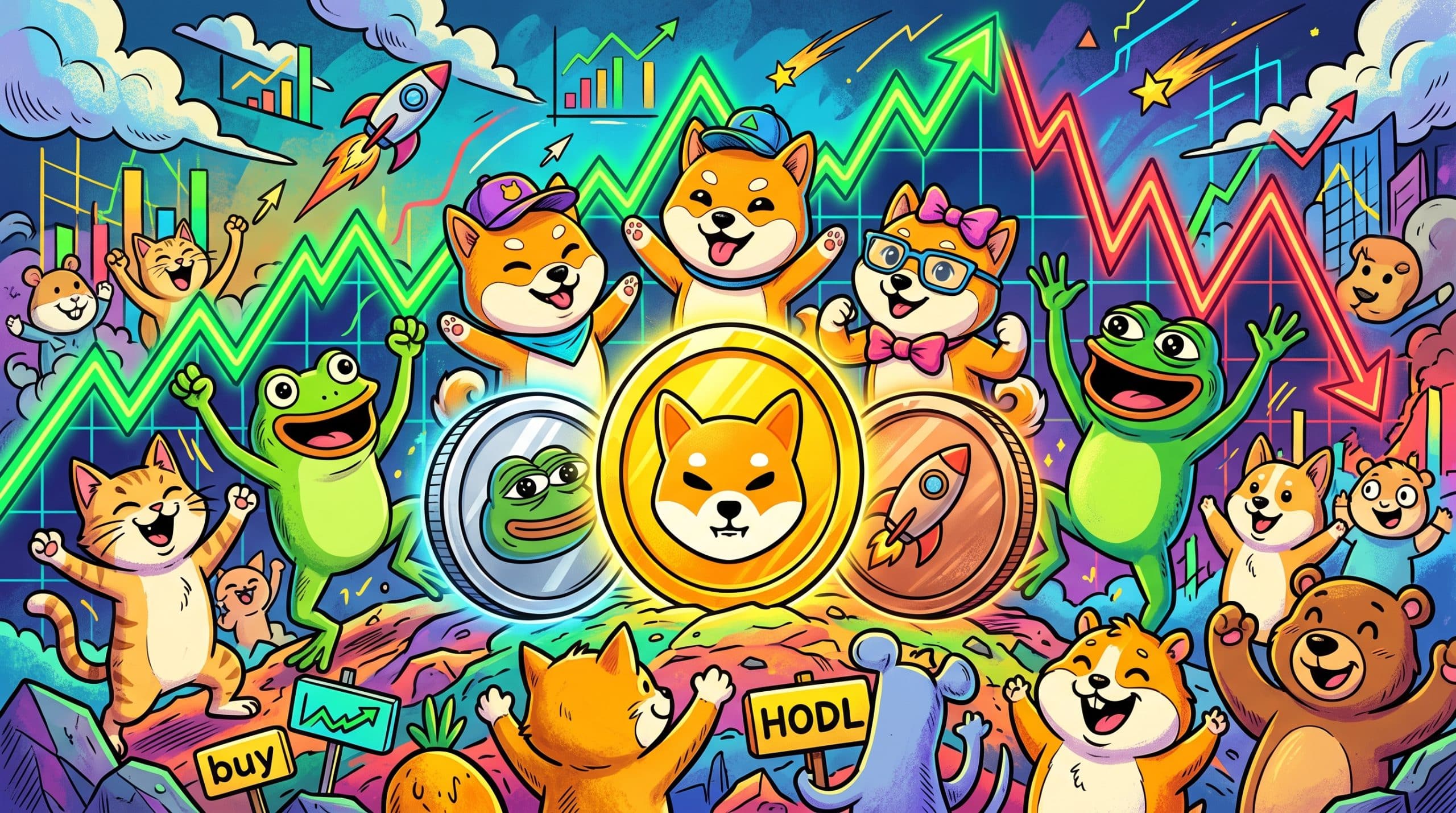
Learn how meme coins like Dogecoin and Shiba Inu work, where they came from, and the risks and community dynamics that drive their prices.

Meme Coins: The Wild West of Crypto Investments

Cryptocurrency has evolved far beyond traditional financial instruments with the rise of meme coins — digital assets that blend internet humor with blockchain technology. These playful yet volatile tokens have captured the attention of investors and internet culture enthusiasts alike, transforming how people perceive digital currencies. Driven by social media trends and viral marketing, meme coins like Dogecoin and Shiba Inu have disrupted conventional investment strategies. While they often start as jokes, these cryptocurrencies can quickly gain substantial market value through community engagement and celebrity endorsements. Understanding meme coins requires diving into a unique ecosystem where internet culture and financial speculation intersect — and where the same forces that create sudden wealth can erase it just as quickly.
Key Takeaways
- Meme coins blend internet culture and cryptocurrency. They derive value from social media trends, community engagement, and viral marketing rather than technical innovation.
- They are highly volatile and risky. Extreme price swings, limited utility, and speculative trading make meme coins among the riskiest corners of the crypto market.
- Community drives success. The value of coins like Dogecoin and Shiba Inu is built on online communities, celebrity endorsements, and social momentum.
- The entry barrier is low, but so is the safety net. Meme coins are cheap and easy to buy, yet they lack fundamental value and long-term stability.
- The category keeps evolving. From satirical beginnings to politically branded tokens, meme coins have become a persistent — if unpredictable — segment of digital assets.
What Are Meme Coins?
Meme coins represent a unique cryptocurrency category born from internet culture and social media trends. These digital assets leverage humor, viral content, and community engagement to create value in the blockchain ecosystem. Unlike traditional cryptocurrencies designed around specific technological innovations, meme coins derive value primarily from social media popularity and collective enthusiasm. Platforms like Reddit and Twitter served as the breeding grounds where playful digital content was transformed into tradable assets.
Origin and Concept
The category began with Dogecoin (DOGE), which launched on December 6, 2013. Billy Markus, an American programmer and former IBM engineer, wrote the software, while Jackson Palmer, then working in marketing at Adobe in Sydney, supplied the concept and the name. The project was conceived as a satirical critique of the 2013 cryptocurrency boom: a lighthearted parody of Bitcoin built around a dog meme rather than a whitepaper full of technical promises.
Even the mascot has a documented origin story. Dogecoin’s branding comes from a 2010 photograph of Kabosu, a Shiba Inu owned by Japanese teacher Atsuko Sato — the image behind the famous “Doge” meme. That combination of recognizable internet humor and a tradable token defined the template every later meme coin has followed: take something the internet already loves, attach a currency to it, and let the community do the marketing.
How Meme Coins Differ From Traditional Cryptocurrencies
- Community-driven development: Meme coins rely heavily on social media engagement and community sentiment rather than corporate or foundation-led roadmaps.
- Limited technical utility: Most meme coins lack sophisticated blockchain functionality compared to established cryptocurrencies like Bitcoin or Ethereum.
- High volatility: Prices swing dramatically based on internet trends, viral moments, and celebrity endorsements.
- Speculative positioning: Investors typically approach meme coins as high-risk, entertainment-driven instruments rather than long-term technological investments.
A Short History of Meme Coins
The meme coin story unfolds in waves, each one expanding the category beyond what came before.
The original joke. Dogecoin stood essentially alone for years as the meme coin. What began as satire developed a durable community, and the coin’s staying power proved that internet culture could sustain a tradable asset long after the original joke faded.
The challengers arrive. Shiba Inu (SHIB) launched in August 2020, created anonymously by a figure known to the crypto community only as Ryoshi. Positioned as a “Dogecoin killer,” SHIB demonstrated that a meme coin could bootstrap an entire ecosystem — including its own decentralized exchange — from pure community momentum.
Celebrity gravity. In June 2021, Elon Musk announced on Twitter that he would name his pet Shiba Inu “Floki” — and that announcement prompted the creation of Floki Inu (FLOKI), which launched the same month. No episode better illustrates how directly celebrity attention translates into new meme coin supply.
New chains, new mascots. Bonk (BONK) launched in December 2022 as the first dog-themed meme coin on the Solana blockchain, proving the format could thrive beyond the ecosystems where it was born.
Brands and public figures move in. Memecoin (MEME) is the native ecosystem token of Memeland, the web3 venture studio by 9GAG — an established internet brand formalizing its entry into the category. The trend reached its most dramatic point when Official Trump (TRUMP) was launched by Donald Trump on January 17, 2025, reaching a peak market value over US$14.5 billion by January 19, 2025, according to Reuters. A category that began as a parody of speculative excess had become the vehicle for some of the most-watched token launches in the industry.
Top Meme Coins in the Market
Dogecoin: The Original Meme Cryptocurrency
Dogecoin remains the reference point for the entire category. Created by Billy Markus and Jackson Palmer as a playful Bitcoin parody featuring a Shiba Inu dog meme, it achieved something its creators never planned: genuine longevity. Its community has weathered multiple market cycles, and support from high-profile figures — most notably Elon Musk — has repeatedly pushed it back into mainstream headlines. For many investors, DOGE is the first and sometimes only meme coin they can name.
Shiba Inu: The Ecosystem Builder
Shiba Inu took the meme coin formula and layered infrastructure on top of it. Beyond the token itself, the project operates ShibaSwap, its own decentralized exchange, and has expanded with the Shibarium blockchain project. SHIB’s trajectory shows both faces of the category: extreme price volatility driven by social media trends, and a community ambitious enough to build real products around a joke.
Other Notable Meme Coins
- Pepe Coin: Based on the popular internet meme character.
- Floki Inu (FLOKI): Launched in June 2021, inspired by Elon Musk’s Shiba Inu dog, Floki.
- Bonk (BONK): The first dog-themed meme coin on the Solana blockchain.
- SafeMoon: Known for its unusual tokenomics model.
- MonaCoin: Japan’s first cryptocurrency meme coin.
- Official Trump (TRUMP): Launched by Donald Trump on January 17, 2025.
- Memecoin (MEME): The native token of Memeland, the web3 venture studio by 9GAG.
The Psychology Behind Meme Coins
Meme coins tap into powerful psychological mechanisms that drive both internet culture and investment behavior. The phenomenon goes beyond traditional financial strategy, leveraging emotional connection and social dynamics to create market engagement that conventional assets rarely see.
Social Media Influence
Social media platforms amplify meme coin popularity through rapid information spread and community-driven narratives. Reddit, Twitter, and TikTok are the critical channels where investors and enthusiasts generate viral content that directly influences valuations. These platforms enable near-instantaneous sentiment shifts, allowing meme coins to experience explosive growth — or dramatic crashes — within hours. Key dynamics include rapid content-sharing mechanisms, community-built narratives, real-time sentiment tracking, and algorithmic amplification that rewards exactly the kind of emotionally charged content meme coins produce.
Celebrity Endorsements
Celebrity involvement transforms meme coins from niche internet phenomena into mainstream stories. Elon Musk’s relationship with Dogecoin is the canonical example, and the Floki episode shows the effect at its most direct: a public announcement about a pet’s name prompted the creation of an entirely new coin. High-profile figures leverage massive follower bases to create instant attention, and that attention converts into trading volume.
Viral Marketing Strategies
Viral marketing distinguishes meme coins from traditional cryptocurrency projects. These strategies rely on humor, relatability, and shareable content that resonates across digital communities. Meme coin creators design campaigns that prioritize emotional engagement over technical complexity: humorous branding, easily digestible visual content, community participation incentives, and cross-platform distribution. In this category, the marketing largely is the product — something with no real parallel in traditional finance.
Investment Risks and Volatility
Meme coins are highly unpredictable assets with extreme price fluctuations and substantial financial risk. Anyone considering them needs a clear-eyed understanding of the market dynamics involved.
High-Risk Nature of Meme Coins
Meme coin value often depends on social media sentiment and viral trends rather than fundamental technological or economic principles. Key risk factors include low market capitalization relative to established cryptocurrencies, limited practical utility, extreme price volatility, minimal regulatory oversight, and ownership concentrated among small groups of large holders. Even the category’s most dramatic successes illustrate the pattern: the TRUMP token reached its peak market value over US$14.5 billion by January 19, 2025 — shortly after its January 17, 2025 launch. Value that forms at that speed can unwind at the same speed when sentiment turns.
Price Manipulation Concerns
Price manipulation is a significant threat in meme coin markets. Pump-and-dump schemes and coordinated social media campaigns can artificially inflate token values before insiders exit. Contributing factors include low trading volumes, minimal regulation, centralized token distribution, an inexperienced investor base, and the speed at which information — accurate or not — spreads across social platforms. Large holders, often called “whales,” can substantially move meme coin valuations through strategic buying or selling.
Speculative Trading Dynamics
Meme coin trading is predominantly speculative rather than fundamentals-driven. It is characterized by short-term horizons, emotion-driven decisions, high risk tolerance, community-influenced market movements, and limited technical analysis. Most participants hope for rapid returns rather than long-term value appreciation, which keeps holding periods short and reinforces the volatility that defines the category.
Potential Benefits and Drawbacks
Community Engagement
Meme coins thrive on robust online communities that drive value and momentum. Reddit, Twitter, and Discord channels become the venues where community members share viral content, coordinate marketing efforts, scrutinize token legitimacy, and rapidly disseminate information. For holders, that community is both the investment thesis and the support network — a dynamic with no equivalent in conventional assets.
Low Entry Barrier
Newcomers find meme coins accessible because of low per-token prices and minimal investment requirements. Fractional purchasing, simple acquisition processes, and reduced technical barriers let people participate with very little capital, broadening market engagement across diverse demographics. That accessibility is genuine — but it also means many participants enter without fully understanding the risks.
Lack of Fundamental Value
The core drawback is structural: most meme coins lack substantial technological infrastructure or clear utility. Minimal practical blockchain applications, thin development roadmaps, and high vulnerability to sentiment shifts mean valuations can unravel as quickly as they formed. Any strategy involving meme coins has to acknowledge that these are emotion-driven assets with unpredictable trajectories.
Technology and Blockchain Considerations
Smart Contract Capabilities
Many meme coins are built on Ethereum-based token standards, using smart contracts for transparent transactions and programmatic token management. Common features include automated liquidity generation, decentralized exchange integration, transparent distribution mechanisms, and programmable transaction rules. Some projects route portions of transaction fees back to holders or implement token-burning mechanisms.
Token Economics
Meme coin tokenomics differ sharply from traditional cryptocurrency models. Supplies are often enormous, which creates a perception of accessibility through tiny per-token prices. Distribution tends to be community-driven, transaction fees may be partially redistributed to encourage holding, and deflationary burning strategies aim to support value over time. These models prioritize community engagement over strict financial fundamentals.
Development Roadmaps
Where roadmaps exist, they typically emphasize community-driven product evolution, iterative blockchain improvements, strategic partnerships, and platform expansion. Shiba Inu’s move from a single token into ShibaSwap and the Shibarium project illustrates the pattern: successful meme coins try to convert community momentum into durable infrastructure before attention moves elsewhere.
Future Outlook of Meme Coins
Meme coins stand at a critical juncture, facing complex challenges alongside genuine opportunities. Their trajectory hinges on regulation, market adaptation, and technological development.
Regulatory Landscape
Governments globally are developing cryptocurrency regulations that could reshape how meme coins operate — through compliance and transparency requirements, investor-protection mechanisms aimed at market manipulation, tax treatment of speculative assets, and reporting obligations for issuers and exchanges. Structured oversight could legitimize parts of the market while squeezing out its most abusive corners.
Market Sustainability
Long-term sustainability depends on continued community engagement, the development of practical utility, broader investor demographics, credible token economics, and stronger project fundamentals. Coins that remain purely speculative face an obvious problem: attention is finite, and the category keeps producing new claimants for it.
Potential Evolution
The most plausible path forward involves deeper blockchain integration, cross-platform functionality, decentralized finance features, and community governance mechanisms. The arrival of established internet brands like Memeland and high-profile launches like the TRUMP token suggest the category is no longer a fringe experiment — but evolving beyond internet humor into assets with substantive value propositions remains the unsolved challenge.
Conclusion
Meme coins represent a fascinating intersection of internet culture and financial innovation. From Dogecoin’s satirical beginnings in 2013 to politically branded tokens commanding multibillion-dollar valuations, the category has repeatedly outlived predictions of its demise — without ever shedding its defining volatility. If you engage with meme coins, prioritize thorough research and disciplined risk management, treat community sentiment as the volatile force it is, and never commit money you cannot afford to lose. The cryptocurrency landscape continues to evolve, and meme coins are likely to remain one of its loudest, least predictable corners.
Frequently Asked Questions
What are meme coins?
Meme coins are cryptocurrencies that originated from internet humor and viral culture. They are characterized by playful origins, strong community engagement, and value driven by social media rather than technical innovation. Dogecoin and Shiba Inu are the best-known examples.
How do meme coins differ from traditional cryptocurrencies?
Traditional projects like Bitcoin and Ethereum focus on blockchain solutions and technical utility. Meme coins prioritize humor, relatability, and social media engagement as their primary value proposition, and they typically carry lower market capitalizations and higher volatility.
Who created the first major meme coins?
Dogecoin was created by Billy Markus and Jackson Palmer and launched on December 6, 2013. Shiba Inu followed, launching in August 2020 under an anonymous creator known as Ryoshi.
Are meme coins a good investment?
They are highly speculative and risky. Value is driven primarily by community sentiment, social trends, and celebrity endorsements rather than fundamentals. Extreme volatility means prices can collapse as quickly as they rise; thorough research and strict risk management are essential, and you should only use money you can afford to lose.
How do meme coins gain value?
Through community engagement, social media momentum, viral marketing, and celebrity attention. Platforms like Reddit, Twitter, and TikTok spread awareness rapidly, while mechanisms such as token burning and holder-redistribution incentives are designed to support prices.
What are the biggest risks of investing in meme coins?
Extreme price volatility, potential market manipulation including pump-and-dump schemes, lack of fundamental value, concentrated ownership, and minimal regulatory oversight. Low trading volumes in smaller coins amplify all of these risks.
Can meme coins become legitimate long-term assets?
Some may evolve by building real technological foundations and utility — Shiba Inu’s ecosystem expansion is one such attempt. Success depends on sustained community engagement, continuous development, and regulatory compliance, but most meme coins remain purely speculative.
What role does social media play in meme coin popularity?
A central one. Social platforms drive viral marketing, community building, and collective investment decisions, and a single high-profile post can move markets — as the Floki Inu episode demonstrated when a naming announcement spawned an entire coin.
What should investors consider before buying meme coins?
Evaluate community strength, project transparency, the development roadmap, token economics, and any genuine utility. Understand that total loss is a realistic outcome, diversify accordingly, and only allocate disposable capital.